Start Specific
Name the operation and material before discussing a model.
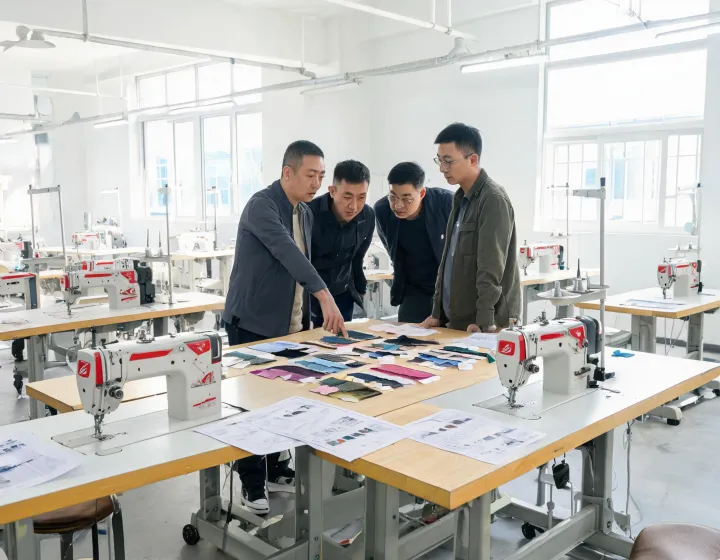
Jack serves professional sewing markets through machines, dealer relationships and application conversations. This site focuses on the part a buyer can control: a clear production brief, a repeatable sample and a documented handover.
Model availability, configuration, pricing and service scope vary by region. Those details belong in a written dealer confirmation, not in a broad brand claim.
Industrial sewing purchases often begin with a familiar model name or a catalogue feature. The useful conversation starts one step earlier. A shirt factory may care about clean starts and repeated operator motions; a knitwear team may prioritize differential feeding and seam recovery; a bag workshop may need stable control across binding and stacked reinforcement.
That practical question shapes our editorial approach. We explain machine families in the language of operations, tell buyers which evidence to bring to a demonstration, and separate model facts from planning assumptions. We do not treat one test seam as proof for every fabric, or a nominal maximum speed as a production rate.
Keep the stitched sample, needle system, thread, settings and attachment list together. Without that record, a good demo is difficult to reproduce.
The result is a calmer buying path: define, test, record, confirm and hand over. A dealer remains the source for local commercial terms, installation scope and after-sales coverage.
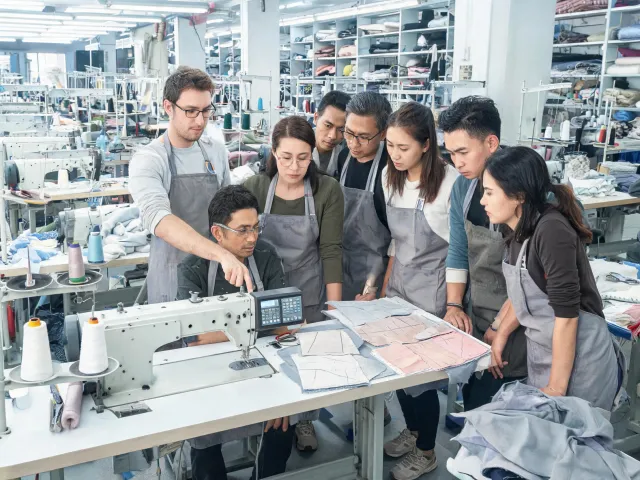
A generic introduction cannot replace instruction on the installed machine, options and attachments. During handover, teams should identify threading routes, daily cleaning points, needle and thread references, safe adjustments and the escalation path for faults. Language, shift coverage and supervisor ownership are part of that plan.
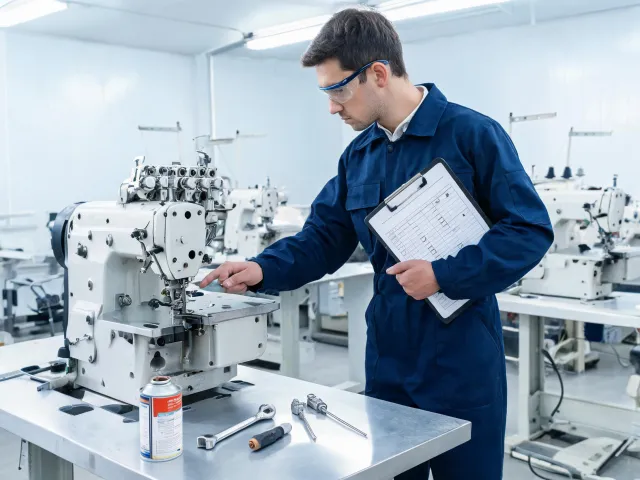
Duty cycle, material dust, compressed-air quality and preventive maintenance affect real line behavior. A machine trial cannot predict every production condition. Buyers should confirm consumables, routine intervals, technician travel coverage and critical-parts lead times for their region before treating any uptime estimate as a planning input.
Share one representative operation, the quality checkpoints and the constraints around training or service. That is enough to start a more useful dealer conversation.